Space Engineers 2 Warhead: Everything That Can Explode Since VS2.3
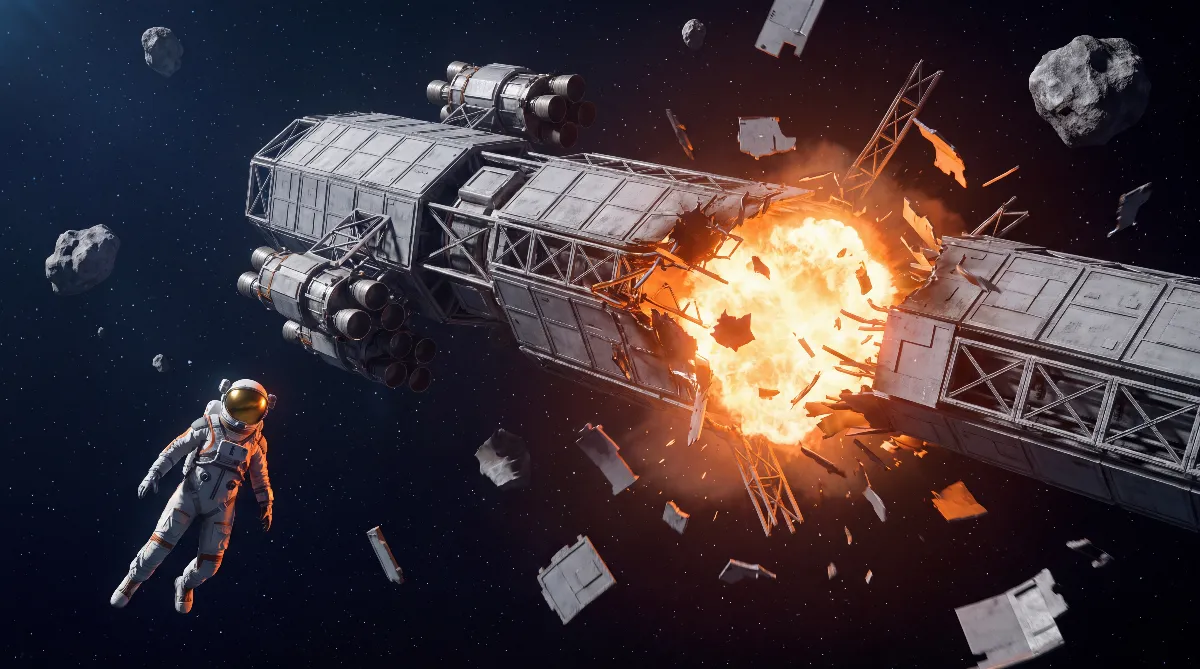
A Space Engineers 2 warhead is no longer the only thing on board that can blow up. Since VS2.3, O2/H2 tanks, running reactors and ammo stored in inventories explode as well, so a single rocket hit can set off a chain reaction that takes half a section with it. This guide covers the documented warhead stats and, more importantly, how to place tanks, reactors and ammo so a hit stays local.
💥 What a Space Engineers 2 warhead actually does since VS2.3
The warhead is a functional weapon block that comes in two sizes: Warhead 0.5 m and Warhead 2.5 m. It does nothing until it's armed. Once you flip the Arm toggle, it goes off either when the countdown runs out (you set the duration in seconds) or when it gets destroyed by gunfire or a collision. The blast damages grids, terrain and players within range.
The real change sits in Keen's VS2.3 patch notes. Next to warheads, they list O2/H2 tanks, functional reactors and ammo in inventories as things that explode. In practice your ship now carries several charges you never built as charges. The hydrogen tank behind the cockpit, the reactor in the engine room, the rocket crate next to the turret: all of them are ignition points. If you still build the way you did before VS2.3, you'll lose far more blocks under fire than you need to.
Keep your expectations in check, though. Keen says the range, force, damage and visuals of explosions aren't final and will keep changing. "Hostile Encounters" on October 19, 2026, also added damage multipliers for certain block types, again without published values. The community wiki doesn't list damage numbers or blast radii either. Any figure you see for those is a guess, so this guide sticks to numbers that are documented.
⚠️ What explodes besides a Space Engineers 2 warhead
| Block | Why it explodes | Documented stats |
|---|---|---|
| Warhead 0.5 m | Armed: countdown, or destroyed by gunfire or impact | 56.09 kg mass, 44.87 health, 100 PCU |
| Warhead 2.5 m | Same triggers, much bigger charge | 1,882.73 kg mass, 1,506.19 health, 100 PCU |
| Hydrogen Tank 5 m | Stored hydrogen detonates when the tank is destroyed | 1,534.87 kg, 1,227.9 health, 32,000 capacity |
| Reactor 2.5 m | Only dangerous while running ("functional") | 1,902.37 kg, 1,521.89 health, 12,000 kg max inventory |
| Ammo in inventories | Rockets in containers, turret and launcher inventories go off too | Rocket Turret 2 m: 175 kg max inventory |
The health column is the interesting part. A hydrogen tank takes 1,227.9 points, a reactor 1,521.89. That sounds like plenty, but it isn't much against rockets. The Rocket Turret 2 m has an 800 m range and the wiki rates its grid damage as "High", and the Rocket Launcher 2 m fires at the same distance. Armor in front of a tank buys you time, not safety.
🛡️ Placement rules since VS2.3
Chain reactions are where ship design changes. Compact used to be good: short paths, low mass, everything important packed tight. That exact layout is now a fuse, and every Space Engineers 2 warhead you carry makes it shorter. These rules follow from it:
- No twins. Never put two tanks or two reactors right next to each other. If one goes, it takes its neighbor with it, and that one takes the next. Leave at least one empty or non-critical block in between.
- Split, don't stack. Spread your tank capacity across two smaller tanks in different hull sections instead of one big one. You lose a bit of mass efficiency, but one hit only costs you half your range.
- Explosive blocks go outward, not inward. Sounds backwards, but it works. A tank right under the outer hull blows a hole to the outside when it pops. The same tank amidships next to the cockpit and reactor rips open your command center.
- Keep the reactor away from the cockpit. Leave at least one section between a running reactor and the pilot seat. If you fight a lot, batteries are the better pick, since they aren't on the explosion list in the patch notes. Our power guide shows how to balance the two.
- Store ammo thin. The Rocket Turret 2 m only holds 175 kg in its inventory anyway. Don't keep big rocket stocks in one central container. Use several small depots near the turrets, and never in the same room as tanks.
- Turrets on outriggers. Turrets are the first thing that gets shot. Mount them on short structures that stick out from the hull instead of directly above the engine room. If a turret and its ammo get destroyed, the blast eats the outrigger instead of the reactor.
- Empty space is armor. An empty block between two critical systems costs no material and breaks the chain more reliably than an extra armor plate.
On new builds this is easy to plan in, and the basics are in our ship building guide. For existing ships, a targeted refit pays off: move tanks and reactors apart, leave gaps, split up ammo storage. It takes about ten minutes and saves your hull.
🔧 Using a Space Engineers 2 warhead on purpose
The mechanic works in your favor too, and the build cost is low. The small Warhead 0.5 m needs 2 (+3) Steel Plate, 1 Electronic Parts and 4 Magnesium Powder. The large Warhead 2.5 m costs 16 (+24) Steel Plate, 8 Electronic Parts and 32 Magnesium Powder. Magnesium is the bottleneck, and our ores guide shows where to find it.
- Demolition charge: A large Space Engineers 2 warhead (Warhead 2.5 m) on a wrecked grid saves you a long grinding session. Set the countdown and back off.
- Timed rocket: A small grid with thrusters, a warhead and a timer makes a crude missile. You control it with the same blocks covered in our timer and sensor guide.
- Trap: An armed warhead tucked into a wreck is the cheapest defense there is. Since "Hostile Encounters", there are combat NPCs to use it on: the Renegades and their Boatmen. Against other players it only matters once co-op arrives, which Keen currently plans for early 2027 (more in our multiplayer guide).
- Never store them armed. An unarmed warhead on a shelf breaks like any other block. An armed one in the cargo hold is a total loss waiting to happen.
✅ Quick refit checklist
- No tank next to a tank, no reactor next to a reactor
- At least one block of space around the cockpit
- Ammo spread across several small containers near the turrets
- Turrets on outriggers, not above the engine room
- Every Space Engineers 2 warhead in storage stays unarmed
- In Classic Survival, budget extra repair material
💡 Frequently Asked Questions about the Space Engineers 2 Warhead
How much damage does a Space Engineers 2 warhead do?
That isn't documented. Neither the wiki nor the patch notes list damage values or blast radii, and Keen says range, force and damage are still being balanced. The damage multipliers from "Hostile Encounters" came without numbers too. Only mass, health, PCU and build cost are documented.
Do batteries explode like a Space Engineers 2 warhead?
The VS2.3 patch notes only name O2/H2 tanks, functional reactors and ammo in inventories next to warheads. Batteries aren't on that list. The mechanic is still changing in the alpha, so that's no guarantee for future versions.
Does a reactor that's switched off still explode?
The patch notes say "functional reactors". By that wording, a reactor that's turned off is far less of a risk. Taking backup reactors offline before a fight cuts the number of ignition points on board.
What's the range of the rocket weapons?
The Rocket Turret 2 m and the Rocket Launcher 2 m are both listed with an 800 m max firing range and one rocket per tube. The turret draws 25 units of power and weighs 886.11 kg. The launcher weighs 175.29 kg and needs no power.
Is it worth refitting old ships?
Yes, if you ever get into combat range. Pure mining and hauling ships can stay as they are. Anything carrying turrets should follow the placement rules above. If you're new to the game, start with our beginner's guide.
Checked against Keen Software House's VS2.3 patch notes ("Drive, Automate and Detonate"), the "Hostile Encounters" patch notes with the hotfixes from October 20 and 22, 2026, and the community-run Space Engineers 2 wiki (spaceengineers2.wiki.gg), as of November 2026. Space Engineers 2 is in alpha, so explosion values and balancing can change with any update.