Space Engineers 2 Classic Survival: What the Classic Start Changes
- ⛏️ What Space Engineers 2 Classic Survival actually changes
- 🔧 The Space Engineers 2 Classic Survival balance changes
- 📦 What was missing in April, and what's here now
- 🎯 Who is Classic Survival for?
- 🕳️ Ore in three depth tiers: how to dig
- ⏱️ Your first hour in Space Engineers 2 Classic Survival
- 💡 Frequently Asked Questions about Space Engineers 2 Classic Survival
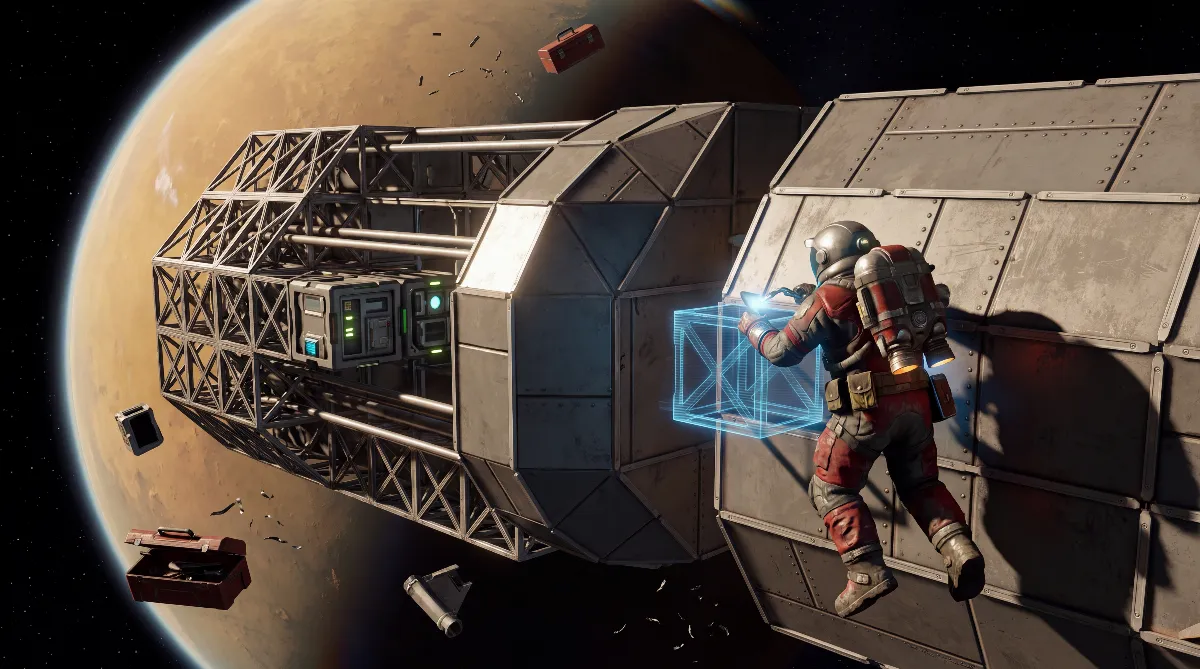
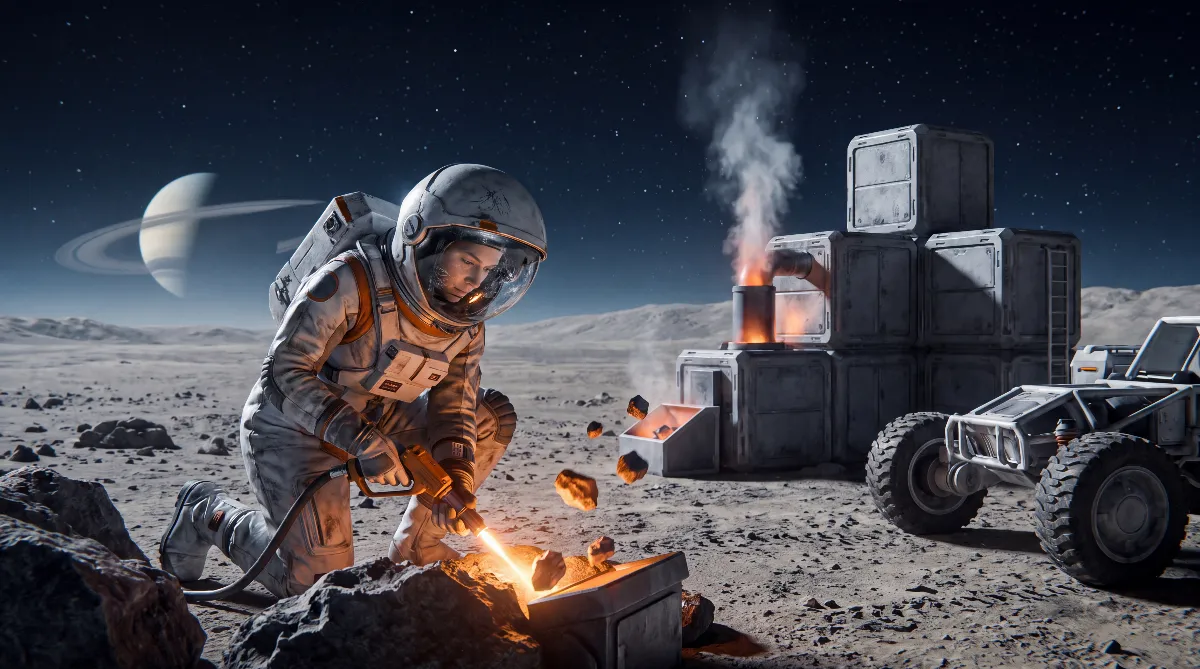
Space Engineers 2 Classic Survival is the old-school survival start you can pick right in world creation since the April 21, 2026 update, no mods needed. You start without a ready-made base, mine your first iron straight out of the ground and work your way up through the Smelter. The big difference from the regular start: on planets, ore comes out of the terrain itself, not just out of ore nodes.
If you're coming from the first Space Engineers, this is the start you've been looking for. Below is what the mode actually changes, which terrain gives which ore, and what has shipped since April, because that's what decides whether the mode is worth starting now.
⛏️ What Space Engineers 2 Classic Survival actually changes
The core is a new ore system on planets. Instead of only fixed deposits, the terrain itself gives you material, depending on what you dig:
| Terrain you mine | Ore you get |
|---|---|
| Soil | Iron |
| Rock | Nickel |
| Sand | Silicon |
Asteroids aren't affected and work as before. In practice, you can't run dry on basic material on a planet anymore. There's always soil, rock or sand somewhere, so progress depends on your pace, not on luck.
The Smelter is now one of the starting unlocks, it was added to the tutorial, and you get a map marker when you discover it. That's exactly where a lot of new players used to get stuck. "Hostile Encounters" reworked the tutorial stages again in October 2026, and Keen says those need a new game or save.
🔧 The Space Engineers 2 Classic Survival balance changes
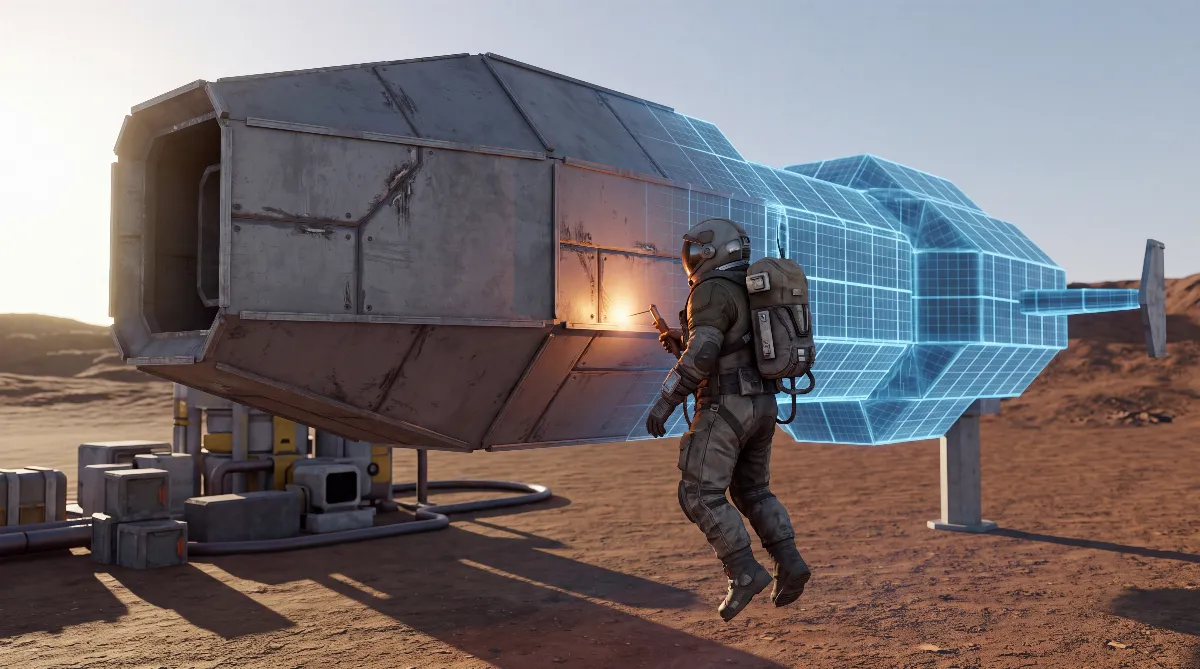
- Welder and grinder rebalanced: the MK1 works at 1.25x speed, so early building goes noticeably faster.
- Simplified recipes for basic blocks and adjusted costs for starter components.
- Tweaked ore yields: iron is slightly lower, nickel and silicon slightly higher.
- Two-line ore notifications: a small thing, but much easier to read while mining.
Once you move into production, continue with our ores guide and the power guide.
📦 What was missing in April, and what's here now
This is where most overviews stop, even though it matters most for your decision. With the Space Engineers 2 Classic Survival update, Keen openly listed which features need a new game and which aren't fully supported yet. Here's where things stand now:
| Feature | Status as of November 2026 |
|---|---|
| Hinges | shipped with VS2.3 |
| Wheels | shipped with VS2.3, in 6 sizes (100 to 1250) |
| Subgrid projections | still "planned, but not fully supported yet" according to the Hostile Encounters patch notes |
| Money and trading (economy) | in the game, but needs a new save to show up |
| Cargo ships | in the game, also only in new saves |
| Combat NPCs | live since "Hostile Encounters" on October 19, 2026 |
| Water | listed for 2027 on the roadmap, no month given; Keen says it will need a new save |
VS2.3 also reworked ore distribution, which shows up in new saves. Ore nodes now come in three tiers (surface, medium and deep at around 100 m), with rarer ores further down. Verdure now has gold, lead and magnesium, and volcanic areas hold rare resource spots. "Hostile Encounters" then gave several ores, including iron, nickel and silicon, a visual overhaul, so they may look different from older screenshots.
🎯 Who is Classic Survival for?
It's a good fit if you come from the first Space Engineers and are used to building from nothing, if you care more about progress through exploration than a head start, or if you used to need mods to get this kind of start.
Maybe skip it for now if you are waiting for water or co-op (the roadmap lists co-op for early 2027 and water for 2027) or plan complex builds that rely on subgrid projections. And in general, Space Engineers 2 is still an Early Access alpha. With bigger updates, Keen keeps saying that some content needs a new save.
For your first build after that, our beginner's guide and the guide to your first ship will help.
🕳️ Ore in three depth tiers: how to dig
Since VS2.3, ore nodes come in three categories: surface, medium and deep at about 100 m. The rarer the ore, the deeper it sits. Sounds obvious, but it completely changes the order of your first hours in Space Engineers 2 Classic Survival.
In practice, don't dig deep at the start. You get iron, nickel and silicon near the surface from soil, rock and sand, and that covers the welder, grinder, Smelter and your first blocks. A 100 m shaft at this point costs time and energy for material you can't even process yet.
Head down only once the Smelter and Assembler are running. Then search on purpose in Verdure, where gold, lead and magnesium show up, and in volcanic areas with their rare resource spots. Our rare ores guide goes deeper on that.
⏱️ Your first hour in Space Engineers 2 Classic Survival
- Mine soil until you have enough iron for the welder. No need to hunt for an ore node, the ground itself delivers.
- Set up the Smelter. It's a starting unlock, it's covered in the tutorial, and the game places a map marker when you discover it.
- Add rock for nickel and sand for silicon. You need both for components once the Smelter is running.
- Secure your power before you ramp up production. Otherwise everything stops when the first battery runs dry.
- Only then go deep or start on vehicles. Wheels come in six sizes since VS2.3, and our rover guide covers the build.
Once production is running, the next logical step is automation. From there, the game builds more for you than you do yourself.
💡 Frequently Asked Questions about Space Engineers 2 Classic Survival
How do I start Space Engineers 2 Classic Survival?
You pick it on the world creation screen: New Game, then Worlds, then Classic Survival. Since the April 21, 2026 update, you no longer need a mod for it.
Which ores do I get from the terrain?
Soil gives iron, rock gives nickel, sand gives silicon. This only applies to planets. Asteroids aren't affected.
Are wheels and hinges in the game yet?
Yes, both came with VS2.3 on July 6, 2026. Wheels come in six sizes from 100 to 1250.
Is there water in Space Engineers 2?
Not yet. The official roadmap lists planet-wide water for 2027, without a month. In its Classic Survival notes from April, Keen also said water will require a new save.
Is Space Engineers 2 Classic Survival harder than the normal start?
Different, not necessarily harder. You start with less, but soil, rock and sand give you basic material reliably, so progress depends more on your pace than on lucky finds.
Checked against Keen Software House's Classic Survival update notes (April 21, 2026), the VS2.3 patch notes (July 6, 2026), the "Hostile Encounters" patch notes (October 19, 2026) with the hotfixes from October 20 and 22, and the official roadmap, as of November 2026. Space Engineers 2 is in alpha, so ore yields and features can change with any update.